Tours & Travel in Kenya
Amboseli National Park Safari Guide: Elephant Viewing, Park Fees and Accommodation
Africa's best elephant viewing under Mount Kilimanjaro — Amboseli's fees, where to stay, when to visit and how to get there from Nairobi.
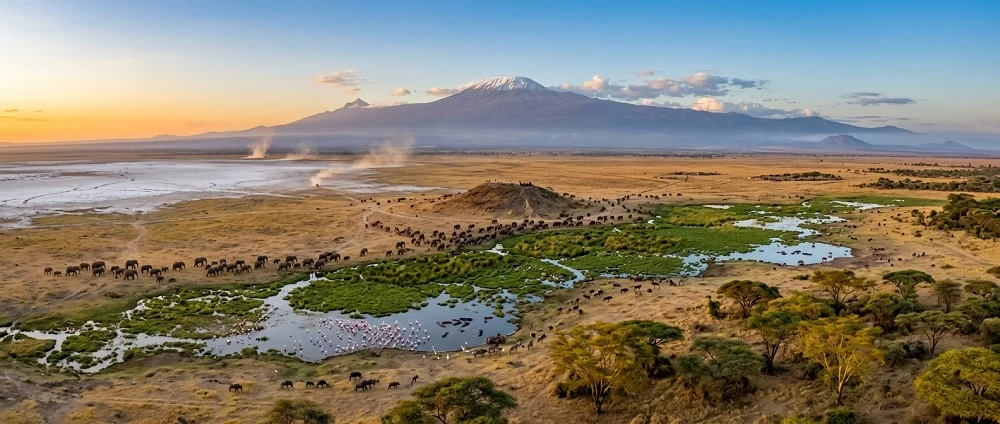
Amboseli National Park, on the Tanzanian border in Kajiado County, delivers two things better than anywhere else in Africa: close-up elephant encounters and views of Mount Kilimanjaro rising over the plains.
The elephants and other wildlife
Amboseli's elephants are among the most studied in the world — large tuskers and family herds that are habituated to vehicles, allowing extraordinary viewing at close range. The park also has lions, cheetahs, hyenas, buffalo, zebra, wildebeest and over 400 bird species. The permanent swamps (Enkongo Narok and Olokenya) fed by Kilimanjaro's meltwater concentrate wildlife year-round, which is why Amboseli delivers even in the dry season.
Entry fees
Amboseli is a KWS premium park: non-resident adults pay a USD daily rate, while Kenyan citizens and residents pay a much lower shilling rate with ID; children pay less. Payment is cashless. Check kws.go.ke for the current tariff before you go. Our safari cost guide shows how fees fit a total trip budget.
Getting there
- By road from Nairobi: about 240 km, roughly 4 hours via Emali on the Mombasa highway, then south through Oloitoktok or via Namanga. The final stretch is rough — a 4x4 is strongly recommended.
- By air: scheduled flights from Wilson Airport take about 45 minutes to the Amboseli airstrip.
Where to stay
- Inside the park: a handful of lodges and a KWS campsite with Kilimanjaro views.
- Outside the park: budget camps and mid-range lodges along the eastern boundary; community conservancies (like Selenkay) offer a quieter alternative with Maasai cultural visits.
- Typical costs: budget camps from around KSh 5,000–10,000 per person; mid-range lodges KSh 15,000–30,000 per person per night full board; luxury properties well above that. Estimates — confirm with properties directly.
Best time to visit
- June–October and January–February: dry seasons, best game viewing, and the best chance of clear Kilimanjaro views (the mountain hides in cloud much of the day — photograph it at dawn).
- April–May: heavy rains can make roads difficult, but the park is green, empty and cheap.
Practical tips
- Be at the swamps early — elephants cross to feed in the morning.
- Dust is real: bring a buff or mask and protect camera gear.
- Carry ID for citizen rates.
- Combine with Tsavo West (via the Chyulu Hills) for a longer southern circuit — see our road trips guide.
Related articles
- #elephants
- #amboseli
- #safari