Tours & Travel in Kenya
Mount Kenya Hiking Guide: Routes, Costs, Preparation and Best Time to Climb
How to climb Mount Kenya — the three main routes, realistic costs, fitness and gear requirements, and the best months to attempt Point Lenana.
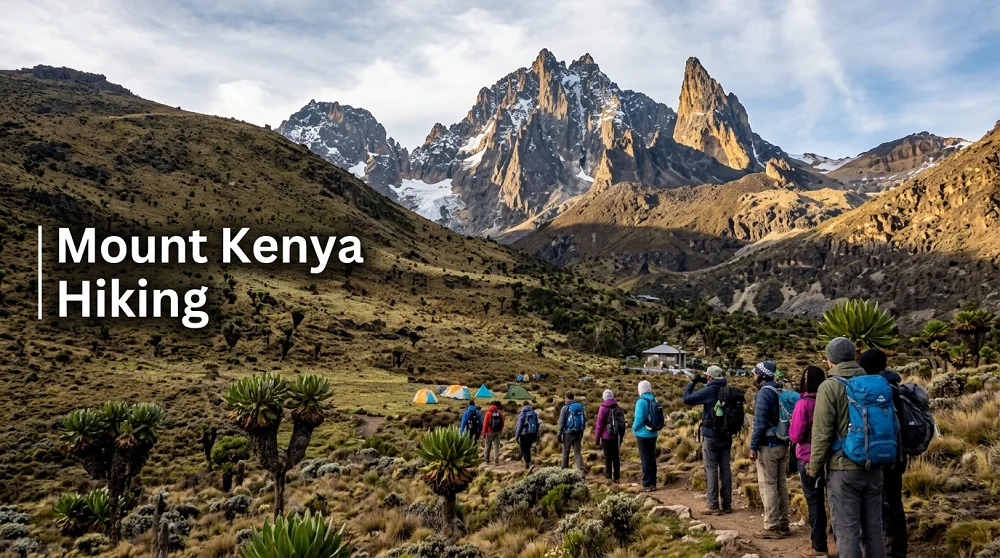
At 5,199 m, Mount Kenya is Africa's second-highest mountain — and for most trekkers a more rewarding climb than Kilimanjaro: fewer people, better scenery and genuine technical summits (Batian and Nelion) for climbers. Most hikers aim for Point Lenana (4,985 m), the trekking peak.
The three main routes
- Sirimon (northwest): the gentlest gradient and best acclimatisation profile. Approaches through forest and moorland to Old Moses and Shipton's Camp. Most popular for ascent.
- Chogoria (east): widely considered the most scenic — the Gorges Valley, Lake Ellis and the Temple. Often used for descent. The roadhead is far from the park gate, so budget for 4x4 transfer or a long first day.
- Naro Moru (west): the shortest and fastest to Point Lenana, but steep and with a notorious bog section (the Vertical Bog). Best for fit trekkers short on time.
A classic traverse is up Sirimon, down Chogoria over 4–5 days.
How long and how fit
Allow a minimum of 4 days (3 nights) for a Point Lenana trek; 5 days is safer for acclimatisation. You do not need technical skills for Lenana, but you need decent fitness — expect 5–8 hours of walking on summit day, starting around 2–3 am. Altitude sickness is the main risk: ascend slowly, hydrate, and descend if symptoms worsen.
Costs
Budget for:
- Park fees: KWS charges daily entry for Mount Kenya National Park, with much lower rates for citizens/residents than non-residents — check current tariffs on kws.go.ke.
- Guide, cook and porters: required in practice (and guides effectively mandatory for safety). A guided 4–5 day trek with a local operator typically runs from roughly KSh 40,000–80,000 per person for Kenyan residents in a group, more for private or non-resident treks.
- Hut fees or camping: the mountain has basic huts (Old Moses, Shipton's, Mackinder's) or you can camp.
- Transport: Nairobi to Nanyuki/Chogoria by matatu or private car, plus 4x4 transfers to trailheads.
All figures are estimates; get quotes from licensed operators and confirm KWS fees directly.
Best time to climb
The reliable windows are January–March and July–October (dry seasons). Avoid the long rains (April–June) and short rains (November) — trails become muddy and summit attempts miserable.
Gear essentials
Warm layers (temperatures drop well below freezing at night), a good sleeping bag rated to at least -10°C, waterproof shell, broken-in boots, headlamp, sunglasses and sunscreen. Most operators rent sleeping bags and jackets in Nanyuki.
Related articles
- #hiking
- #mount kenya
- #trekking kenya